The best self-improvement writing notices how a small, repeated discipline compounds into something larger. That same principle runs through the books worth reading on habits, money, and decision-making. It also runs through the least glamorous item on any homeowner’s calendar: the annual chimney sweep.
Tasks that refuse to be romanticized have a particular clarity. You do not post about sweeping your flue. You do not feel virtuous laying dust sheets. Yet the homeowners who treat this as non-negotiable practice the foresight James Clear advocates in Atomic Habits and Morgan Housel describes in The Psychology of Money. They make a small payment now to avoid a catastrophic cost later. The question is not whether you can afford the sweep, but whether you can afford the fire.
What an Unswept Chimney Actually Costs
Most chimney fires in the UK begin in unswept chimneys. The mechanism is brutally simple. Burning wood or solid fuel produces soot and creosote, a tar-like deposit that clings to flue walls. Leave it long enough, and you have lined your chimney with fuel. Strike the right temperature, and the result is not a contained incident but a house fire that endangers lives and destroys property.
The risk extends beyond flames. Blockages from bird nests, particularly jackdaws in Wiltshire and Somerset, can force carbon monoxide back into living spaces. Cracked flue liners and damaged chimney pots allow structural deterioration that starts invisible and ends expensive. Each of these problems is identifiable early and becomes dangerous when ignored.
Insurance adds another layer of consequence. Most policies covering solid fuel use require evidence of annual sweeping. Produce a valid certificate after a fire, and your claim proceeds. Fail to produce one, and the insurer may decline, leaving you with the full cost of damage you could have prevented for the price of a routine visit.
The Discipline of Prevention
The self-improvement parallel becomes unavoidable here. The books that actually change behavior, rather than merely inspiring it, share a common structure. They identify a small intervention with disproportionate downstream effects. They persuade you to automate that intervention so willpower becomes irrelevant, then they show you the compound result.
Annual chimney sweeping fits that structure precisely. Industry guidance recommends at least one sweep per year for wood-burning stoves and open fires in regular use, twice for heavy use. Smokeless fuel appliances need annual attention. Gas fires need sweeping every two years. These are modest, scheduled commitments that remove the need for decision-making in the moment.
The homeowners who follow this guidance are not more virtuous than others. They have simply accepted that maintenance is not a project to be completed but a rhythm to be maintained. That distinction separates the books that collect dust from the books that alter behavior.
What Professional Sweeping Actually Involves
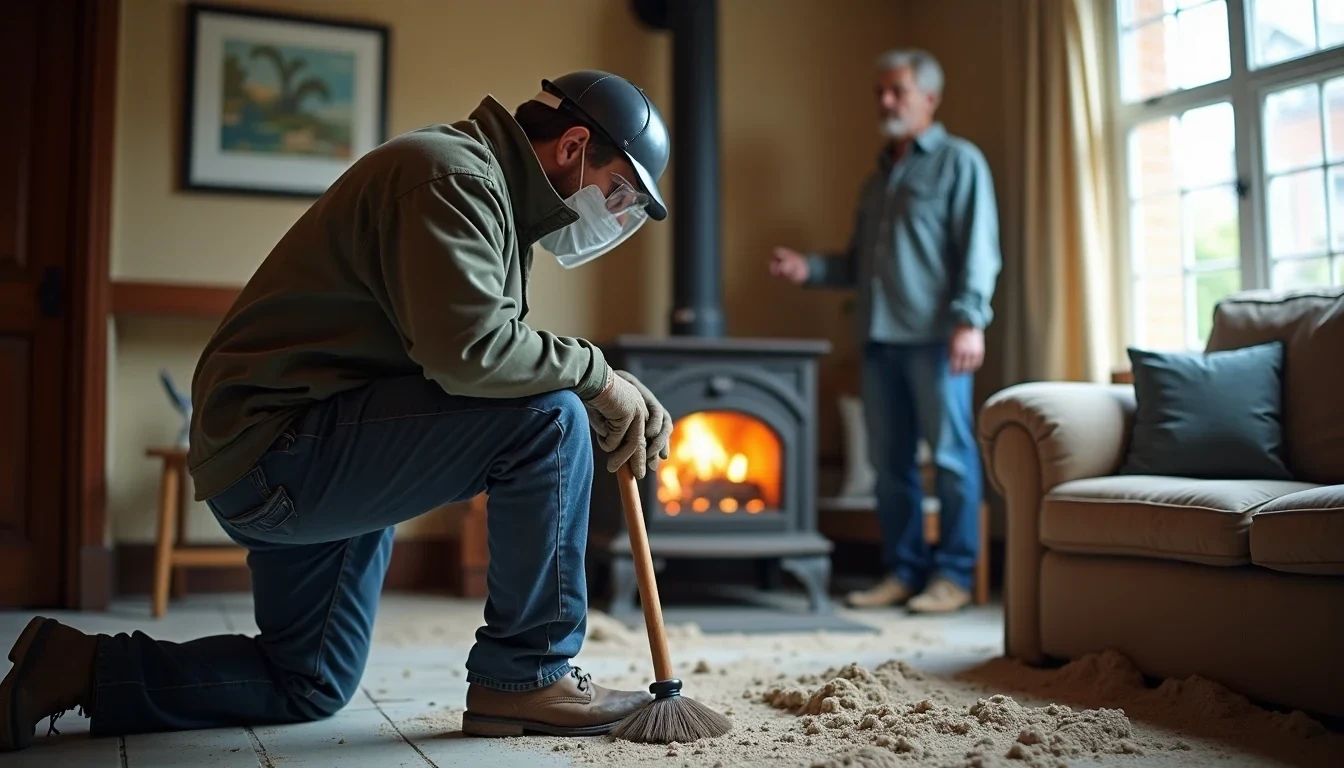
Understanding the service helps explain why it works. A proper sweep arrives on time, protects the fireplace area with dust sheets, and uses professional brushes and vacuum equipment designed to capture soot at source. The full flue is swept thoroughly, not superficially. Afterwards, you receive a verbal summary of findings and a certificate recognized by insurers.
The honesty of the inspection matters as much as the sweep itself. A worthwhile professional reports cracked flue liners, bird nest debris, heavy creosote buildup, or damaged pots without inventing problems or pushing unnecessary work. The value is in accurate information, which lets you make informed decisions about repairs before small issues become structural crises.
For properties across Wiltshire, Somerset, Bath, Bristol, and surrounding towns, the family-run operation Chimney and Home provides this service with the particular attention that period properties require. Phil Markides brings two decades of experience to the work itself, while Angela manages bookings, creating a straightforward process for scheduling what should be an automatic annual appointment.
Transferring the Logic to Other Domains
The principle extends. Regular financial reviews catch spending drift before it becomes debt. Consistent skill development prevents career obsolescence. Open communication in relationships stops resentment from calcifying. Routine medical check-ups identify risks while they remain manageable. In each case, a small, scheduled investment of attention prevents a large, unscheduled crisis.
The books that earn their shelf space make this transferable. They describe the systems that produce success, which is why a chimney sweep certificate and a quarterly budget review belong to the same category of behavior. Both are evidence that you are treating the future as a stakeholder in present decisions.
Who Should Read This Seriously
This applies most directly to owners of period properties with working fireplaces or solid fuel appliances, particularly those in Wiltshire, Somerset, Bath, and surrounding areas where traditional construction methods require specialist knowledge. New property owners should sweep before first use if the last sweep date is unknown. Anyone whose insurance policy covers solid fuel use needs to understand the documentation requirements that protect their coverage.
More broadly, it applies to anyone who has read the right books on habits and foresight but struggles to implement them in practical domains. The chimney sweep is not a metaphor. It is a concrete, annual action that demonstrates whether your reading has changed your behavior or merely your vocabulary.
The homes that burn are not the homes of the careless. They are the homes of the busy, the distracted, the optimistic. Prevention is not exciting; that is precisely why it works.